DA says a teen who recorded San Diego mosque shooting livestream has been charged with murder
News > Top Stories


Audio By Carbonatix
12:45 PM on Monday, August 31
By GENE JOHNSON
A 17-year-old North Carolina girl who recorded a livestream of a shooting that killed three people at a San Diego mosque and then disseminated the attackers’ white-supremacist writings has been charged with murder by aiding and abetting, a district attorney said Monday.
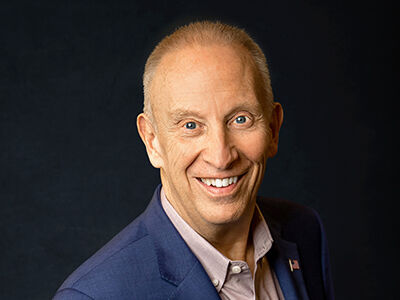
Forsyth County District Attorney Jim O’Neill said at a news conference in Winston-Salem that the girl, identified in court records as Sarah L. Santiago, was arrested last week. A grand jury indicted her on three counts of murder and one count of conspiracy Monday.
“At this time I can confirm that my client is innocent of all these charges,” Santiago’s attorney, Alan Doorasamy Sr., wrote in an email to The Associated Press. He said he had not received evidence from law enforcement and did not elaborate on any connection between Santiago and the attackers.
Under North Carolina law, the aiding-and-abetting charges carry the same penalties as if the girl had committed the attack herself, O'Neill said. She is charged as an adult and was being held without bond.
According to the indictment, Santiago agreed prior to the attack that she would record the livestream as the gunmen filmed it, distribute the recording, and release a document written by the attackers. She carried out those tasks, it said. She's also accused of purchasing a patch bearing a white-supremacist symbol and sending it to one of the gunmen to wear during the attack.
In all, three people watched the initial livestream, O'Neill said. It was not immediately clear if investigators had identified the others, and the indictment did not specify on which platforms the livestream was recorded or shared.
“The individual here, locally, was the person who was recording the livestream," O'Neill said. “She disseminated that information and she published their manifesto.”
Cain Clark, 17, and Caleb Vazquez, 18, stormed the Islamic Center on May 18 before being driven back outside by a security guard who exchanged gunfire with them as he initiated a lockdown, helping to protect 140 children who were just steps away.
The pair killed the guard, Amin Abdullah, and two other men before taking their own lives in a vehicle nearby. They left behind rambling writings full of vitriol against a wide range of people, and cited the shooter who killed 51 people at two mosques in Christchurch, New Zealand, in 2019, as one of the models for their violence.
Clark and Vazquez also planned subsequent attacks on two other targets: a Jewish temple and a predominantly Black high school, O'Neill said. He credited the guard and other victims at the mosque with having saved countless lives.
The attackers' writings cited a range of far-right ideological inspirations, including the notion that white people are being replaced by other populations, and detailed their motives and goals. They included hateful rhetoric toward Jewish people, Muslims and Islam, as well as the LGBTQ+ community, Black people, women, and the political left and right.
They indicated they were trying to accelerate the collapse of society. Vazquez wrote of having “some mental health issues” and being rejected by women.
In a written statement, the Vazquez family said Caleb Vazquez was on the autism spectrum and had grown to resent parts of his identity. The family said they believed that, combined with exposure to hateful rhetoric online, contributed to his radicalization.
Tazheen Nizam, executive director of the San Diego office of the Council on American-Islamic Relations, a Muslim civil rights group, said it is essential to hold everyone involved in such attacks accountable.
“We as a community need to invest in dismantling anti-Muslim hate,” Nizam said.
Santiago's arrest came just days before classes were to begin for the new school year, O'Neill said.
“The thought of her going back to school ... we didn't know what she was capable of,” he said.
___
Johnson reported from Seattle. Associated Press writers John Raby in Charleston, West Virginia; Jeffrey Collins in Columbia, South Carolina; and Julie Watson in San Diego contributed.