Why caffeine makes you sweat
Lifestyle

Audio By Carbonatix
9:00 AM on Friday, October 23
By Israel Fontoura for AXE, Stacker

You finish your second cup of coffee, and 20 minutes later, you're feeling damp. Nobody warned you about this part. Are caffeine and sweating even connected? Yes.
Below, AXE, the deodorant brand for guys, shares the mechanism behind it, whether coffee, energy drinks, or pre-workout stacking makes any difference, and how to stay dry without giving up your brew.
Key Takeaways
- Caffeine revs up your central nervous system, the same system that tells your sweat glands to fire.
- Stress sweat and regular sweat come from different glands, and stress sweat smells stronger.
- Coffee, energy drinks, and pre-workout stacking can all make you sweat. But it’s the caffeine, not the format.
- Creatine isn't the sweat culprit.
- Antiperspirant, hydration, and pacing your cup beat quitting coffee.
Why Does Caffeine Make You Sweat?
Caffeine is a stimulant, and stimulants talk directly to your nervous system. Drinking anything with caffeine activates your central nervous system, the same system that controls your sweat glands. That's why a cup of coffee can leave you with a light sweat before you've even finished drinking it.
Unilever R&D scientist Matt Annecharico breaks down exactly why. Sleep, stress, caffeine, and alcohol are all linked to one system, the autonomic nervous system, essentially your fight-or-flight response, he explains. "Increased cortisol from a lack of sleep, or caffeine and alcohol increasing the heart rate, can all contribute to patterns of increased sweating," Annecharico says.
Genetics, fitness level, and body size all play a role, too, which is part of why some guys sweat more than others in general, even before caffeine enters the picture.
Stress Sweat vs. Regular Sweat
Not all sweat is the same. Regular sweat is mostly water, so it barely smells on its own. Stress sweat comes from a different set of glands concentrated in the armpits and groin. It contains proteins and fats that bacteria really like to feed on, and that process leaves you with body odor.
Caffeine can trigger both kinds at once: a jolt to your nervous system that mimics the fight-or-flight response, plus a mild uptick of your heart rate and metabolism, making you feel warmer than usual. Stress sweat happens to everyone sooner or later, but caffeine just makes it a little more likely on a random Tuesday.
Does the Caffeine Source Matter? Coffee vs. Energy Drinks vs. Pre-Workout Stacking
The caffeine source does not really matter, at least not in the way most guys assume. It comes down to how much caffeine you're taking in, not where it comes from.
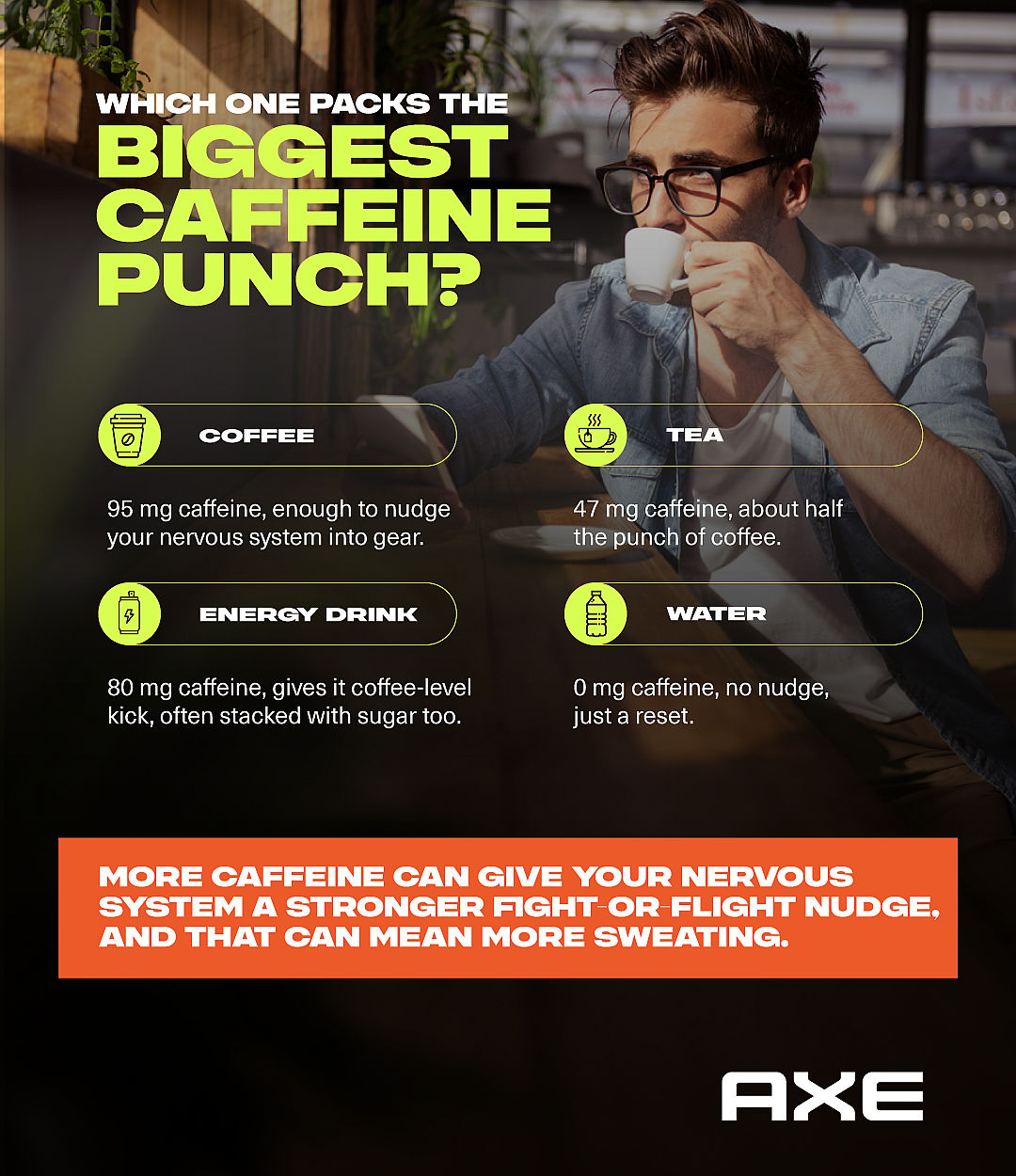
Coffee
Brewed coffee has roughly 95 milligrams of caffeine per 8-ounce cup, enough to bring on a light sweat for plenty of guys, especially on an empty stomach or stacked on top of a second or third cup.
Energy drinks
Energy drinks pack a similar or higher dose into a colder, faster-to-drink format, and the added sugar and other stimulants some brands include can make the overall effect feel more intense, even at a caffeine level similar to a cup of coffee. Doctors also flag energy drinks and caffeine supplements as easier to overdo.
Pre-workout
Pre-workout usually means stacking both caffeine and creatine, but only one of them is the sweat culprit. Caffeine in a scoop is typically 150 to 300 milligrams, more than a strong cup of coffee, and that alone explains a lot.
Creatine gets blamed, but the science doesn't back it up. If it were making you sweat more, you'd expect it to show up as dehydration or heat illness, but athletes on creatine actually showed less of both compared to those who skipped it. And creatine's own safety profile lists weight gain as the only side effect, nothing about sweat, nothing about body temperature.
So the sweat after a scoop? That's caffeine doing its thing, plus the harder session creatine just helped you push through.
How to Drink Coffee Without the Sweat Wave
You don't have to quit caffeine to stop sweating through your shirt by 10 a.m.
Spread it out
Two cups back-to-back hits your system harder than the same two cups spaced an hour apart.
Eat something first
Caffeine on an empty stomach tends to hit faster and harder.
Know your ceiling
Up to 400 milligrams a day, about four cups of coffee, is considered safe for most adults. Staying under that also keeps the jittery, shaky side of caffeine in check, and less nervous system stimulation generally means less sweat, too.
Watch the stacking
Coffee in the morning, an energy drink at lunch, and a pre-workout scoop before hitting the gym add up fast.
How to Stay Cool and Dry Without Giving Up Your Morning Coffee
Nobody's asking you to quit caffeine. Just a few small adjustments, and most of them take less effort than making that coffee in the first place.
Reach for antiperspirant, not just deodorant
A body spray smells great and covers odor, but only antiperspirant reduces sweat at the source. If caffeine's got you running warm, let antiperspirant do the heavy lifting. Look for a men's formula with real staying power. 48 hours is a solid benchmark.
Always apply it to clean, dry skin. Getting that basic step right matters just as much as the scent you pick.
Hydrate with your coffee
Drinking a glass of water after your coffee won't cancel out the caffeine. It keeps you from running dry on top of sweating more.
Know when it's bigger than caffeine
Sometimes coffee's just the easy scapegoat. If sweat is following you around way beyond your morning cup, it's worth understanding why your body sweats and how to manage it. It's also worth a conversation with your doctor if it's affecting your day.
FAQs
Why do I sweat immediately after drinking coffee?
Caffeine activates your central nervous system, and that system controls your sweat glands. The fast turnaround is normal.
Is sweating from caffeine a sign of caffeine sensitivity or intolerance?
Not usually. A little sweat after your usual cup is a normal nervous system response.
Can drinking caffeine cause night sweats?
It's on the list, but it's not the main suspect. Caffeine is commonly flagged as one habit worth cutting back on if night sweats keep showing up, alongside other possible triggers. That's a different situation from sweating while sick, which is your body running a fever, not reacting to a stimulant.
How can I stop sweating after drinking coffee or energy drinks?
Slow your pace, eat something, and stay hydrated. Antiperspirant handles the armpits.
Does caffeine sweat smell worse than regular sweat?
It can, but blame the stress response, not the caffeine. Sweat triggered by stress or a stimulant tends to come from the same glands behind stress sweat. The kind that leads to B.O., not the watery kind you get from heat or exercise.
What are the signs of too much caffeine?
Jitteriness, a racing heart, elevated blood pressure, and feeling unusually anxious are the typical signs. Energy drinks and caffeine supplements are especially easy to overdo compared to a regular cup of coffee. A little sweat with your usual cup is normal. Shakiness or real discomfort on top of it means you've probably had more than your body wants.
Can you sweat out caffeine?
Not in any meaningful way. Caffeine is broken down mostly by enzymes in your liver, according to the American Medical Association, with only a small fraction leaving through pee. Time clears it, not sweat.
You don’t need to ditch the coffee because of a little extra sweat. It’s just your nervous system doing exactly what it's built to do. Pace your caffeinated drinks and shakes, keep water within reach, and let a solid antiperspirant keep you fresh and comfortable throughout your day.
This story was produced by AXE and reviewed and distributed by Stacker.